
In the summer of 2019, one of the largest data breaches in banking history sent shockwaves through the financial world. Capital One, a leading credit card issuer and bank holding company, announced that a hacker had gained unauthorized access to the personal information of approximately 98 million Americans and 6 million Canadians. The breach exposed sensitive data, including names, addresses, credit scores, credit limits, balances, Social Security numbers, and bank account numbers. In the aftermath, a massive legal battle ensued, culminating in the Capital One class action settlement. This article provides a thorough, plain-language breakdown of the settlement, what it means for affected customers, how to claim compensation, and answers to the most frequently asked questions.
Understanding the Capital One Data Breach
Before diving into the settlement details, it is crucial to understand what triggered the litigation. On July 19, 2019, Capital One discovered that a former software engineer for Amazon Web Services, Paige Thompson, had exploited a misconfigured web application firewall to access Capital One’s data stored on AWS cloud servers. The breach occurred between March 12 and July 17, 2019. Unlike many breaches that only capture recent transaction data, this intrusion exposed deep historical information. For many victims, the most distressing revelation was that their Social Security numbers and linked bank account numbers had been compromised. The breach affected both credit card applicants and existing cardholders, as well as individuals who had never done business with Capital One but whose information was held by the bank through third-party relationships.
The incident led to immediate regulatory scrutiny. The Office of the Comptroller of the Currency and the Consumer Financial Protection Bureau imposed a $80 million civil penalty on Capital One. Additionally, the bank agreed to pay $190 million to settle a separate class action lawsuit filed by consumers. That consumer settlement is the focus of this guide.
The Anatomy of the Capital One Class Action Settlement
The Capital One class action settlement was formally approved by the U.S. District Court for the Eastern District of Virginia in late 2021. The settlement was structured to compensate victims for both out-of-pocket losses and the broader risk of future identity theft. The total settlement fund was valued at $190 million, making it one of the largest data breach settlements in history. However, the sheer number of claimants—over 98 million potential class members—meant that individual payouts varied significantly.
The settlement included several distinct forms of compensation. First, there was reimbursement for documented out-of-pocket losses directly caused by the breach. Second, there was compensation for lost time spent dealing with the breach’s consequences. Third, the settlement provided for cash payments for certain forms of less quantifiable harm, such as emotional distress. Fourth, Capital One agreed to implement substantial data security improvements. Finally, the settlement covered the costs of notifying class members and administering the claims process.
Who Is Included in the Class?
The class definition is broad. You are a member of the Capital One class action settlement if your personal information was accessed during the breach incident that Capital One publicly announced on July 29, 2019. This includes individuals whose information was compromised even if they never had a Capital One credit card or bank account. The notice period lasted several months, and Capital One sent direct notifications via mail and email to known affected individuals. However, some class members may not have received direct notice because their contact information was outdated or because they were identified through third-party data aggregators. Even if you did not receive a direct notice, you could still have been a class member and eligible to file a claim.
Excluded from the class are Capital One employees, officers, directors, and the presiding judge and their families. Also excluded are individuals who already settled their claims with Capital One separately.
Types of Compensation Available
The Capital One class action settlement offered a menu of compensation options. Class members could claim one or more categories, subject to overall caps.
Lost time compensation was one of the most claimed categories. Class members could claim $25 per hour for up to 15 hours of time spent dealing with the breach, for a maximum of $375 without any supporting documentation. For claims exceeding 15 hours, documentation was required. This hourly compensation covered time spent reviewing credit reports, placing fraud alerts, freezing credit files, updating payment information with merchants, and communicating with financial institutions.
Out-of-pocket losses were fully reimbursable if they were directly and reasonably caused by the breach. This included costs such as paying for credit monitoring services, purchasing identity theft protection plans, and incurring bank fees due to fraudulent charges or frozen accounts. Class members needed to provide receipts or bank statements as proof.
Forward-looking compensation was unique. The settlement set aside funds to pay for up to three years of identity restoration services. These services included consultation with a fraud resolution specialist, assistance with disputing fraudulent accounts, and help restoring credit reports. This benefit was available to any class member regardless of whether they filed a claim for cash compensation.
Cash payments for general damages, such as emotional distress, were also available but required documentation. Claimants needed to provide a sworn declaration or a letter from a mental health professional. Due to the high volume of claims, these payments were often prorated or capped at a few hundred dollars per person.
A separate provision allowed for reimbursement of up to $20,000 for unreimbursed losses if a class member became a victim of identity theft directly tied to the Capital One breach. To qualify for this higher tier, the claimant had to demonstrate with a police report, credit bureau documentation, or similar official records that the identity theft occurred after the breach and was not pre-existing.
The Claims Filing Process
Filing a claim in the Capital One class action settlement was a multi-step process. The claims period opened in 2021 and originally closed in late 2022, but it was extended multiple times due to administrative delays and a high volume of initial filings. At the time of writing, the claims filing deadline has passed for most categories, but some administrative reviews and late claims are still being processed by the settlement administrator. If you believe you are a class member and you missed the deadline, you may still have recourse by contacting the settlement administrator directly, though late filings are generally disfavored.
To file a claim, class members had to visit the official settlement website, which was distinct from Capital One’s main corporate website. The online form required the claimant’s unique Notice ID and PIN, which were printed on the mailed notice. If a class member lost the notice, they could request a new ID by providing their full name, current address, and the last four digits of their Social Security number. The form asked the claimant to select which categories of compensation they sought, upload supporting documents, and certify under penalty of perjury that the claims were true.
Electronic filing was encouraged, but paper forms were available by calling the settlement administrator. After submission, the claimant received a confirmation number. The administrator then reviewed each claim for eligibility and completeness. Incomplete claims were either rejected with an opportunity to cure or denied outright. The review process took several months, and the first round of payments was issued in 2023.
How Much Did Each Person Receive?
This is the most common question about any class action settlement. For the Capital One class action settlement, the answer is complicated. Because nearly 100 million people were in the class, and because only a fraction filed claims, the average payout varied widely. Early reports from the settlement administrator indicated that approved claimants who filed for lost time without documentation received the maximum $375. Claimants who also had documented out-of-pocket losses saw those reimbursed in full if the total claimed amount was below $1,000. For claims above that, proration applied.
Claimants who sought emotional distress damages typically received between $100 and $500, depending on the strength of their documentation and the remaining funds. The $20,000 identity theft reimbursement was rarely awarded because it required a high burden of proof. Most class members received between $25 and $375. A small percentage received nothing because their claims were incomplete or insufficiently supported. It is important to note that the settlement was not a windfall. It was designed to make victims whole for modest harms, not to punish Capital One or enrich plaintiffs.
Security Improvements Required by the Settlement
Beyond cash payments, the Capital One class action settlement mandated that Capital One enhance its data security practices. These injunctive relief terms were arguably more valuable to future customers than the cash payments were to historical victims. Capital One agreed to maintain a comprehensive information security program consistent with industry standards. It agreed to conduct regular risk assessments, encrypt sensitive customer data both at rest and in transit, and implement multi-factor authentication for system access. The bank also agreed to maintain a bug bounty program and hire an independent third party to audit its security controls for three years.
These injunctive terms are enforceable by the court. If Capital One fails to comply, the class representatives can return to court and seek further relief, including additional monetary penalties. The settlement did not release Capital One from liability for future breaches. Any new data breach would trigger a separate legal process.
Important Deadlines and Current Status
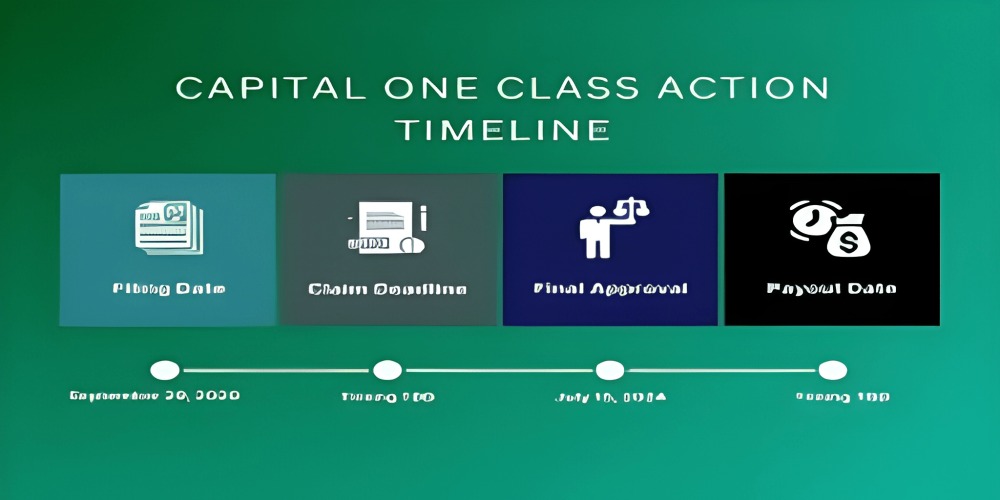
As of early 2026, the Capital One class action settlement is largely complete. The claims filing period closed permanently on September 30, 2022, for lost time and out-of-pocket loss claims. The final deadline for identity theft reimbursement claims closed on December 31, 2023. The settlement administrator issued the last major round of payments in June 2024. However, some administrative matters remain open. A small number of appeals filed by class members who were denied compensation are still pending before the Fourth Circuit Court of Appeals. Additionally, the settlement administrator continues to process a small trickle of late claims from class members who can demonstrate extraordinary circumstances, such as hospitalization or active military deployment during the filing period.
If you are a class member who never received any payment and you believe you filed a valid claim on time, you should contact the Capital One class action settlement administrator directly. Do not contact Capital One customer service for settlement questions, as the bank’s general representatives are not equipped to handle class action inquiries.
Tax Implications of Settlement Payments
Many recipients of the Capital One class action settlement wondered whether they needed to report the payment as income. Under the Internal Revenue Code, payments received for physical injuries or sickness are tax-free. However, the Capital One settlement was for data breach harms, which the IRS treats as general damages or lost time compensation. The IRS has issued guidance stating that settlement payments for lost time and out-of-pocket loss reimbursements are not taxable because they are merely restoring the claimant to the position they were in before the loss. Emotional distress damages are taxable unless they are directly attributable to a physical injury or sickness. Since the Capital One breach did not cause physical injury, any emotional distress payment is technically taxable. In practice, the IRS rarely pursues individual taxpayers for small amounts like $100 to $500, but you should consult a tax professional. The settlement administrator did not issue Form 1099 for payments under $600, as is standard practice.
How This Settlement Compares to Other Data Breach Settlements
The Capital One class action settlement is notable for its size but not unique. The Equifax data breach settlement of 2019 had a fund of up to $425 million for 147 million people, though actual payouts were similar. The Yahoo breach settlements totaled over $117 million. The Marriott breach settlement was $52 million. What set the Capital One settlement apart was its extensive lost time compensation without documentation for up to 15 hours. Many class action settlements require receipts or proof for every dollar claimed. The Capital One settlement’s recognition that time has value was a progressive feature.
Another distinctive aspect was that the Capital One settlement did not require class members to prove they were actually harmed. The mere risk of future identity theft was considered sufficient injury for the lost time compensation. This is a lower bar than many other data breach settlements, which often require proof of actual fraud or unauthorized account openings.
Common Barriers to Receiving Payment
Despite the simplicity of the Capital One class action settlement claims process, many class members encountered barriers. The most common issue was lost notice letters. Because the breach occurred in 2019, many people had moved or changed email addresses by the time notices were mailed in 2021. Without the Notice ID and PIN, filing a claim was more difficult, though still possible by calling the administrator. Another barrier was skepticism. A significant number of class members assumed the notice was a scam. Data breach settlement notices are frequently imitated by phishing criminals. The official settlement notice included specific markers: a reference to the case name “In re Capital One Consumer Data Security Breach Litigation,” the court’s address in Alexandria, Virginia, and the name of the settlement administrator, which was a reputable third-party claims administration firm. The official website used a .com domain but cross-referenced the court’s docket.
A third barrier was documentation. Many class members requested emotional distress payments but did not provide any supporting documentation beyond a vague statement. The settlement administrator denied those claims or offered only the minimum $25.
Frequently Asked Questions
Below are the most frequently asked questions about the Capital One class action settlement, answered directly.
- What is the Capital One class action settlement?
The Capital One class action settlement is a $190 million agreement that resolved lawsuits brought by customers and other affected individuals after a 2019 data breach exposed personal information of about 98 million people. The settlement provided cash payments, lost time compensation, identity theft reimbursement, and security improvements.
- Am I eligible for the Capital One class action settlement?
You are eligible if Capital One notified you that your personal information was accessed during the data breach that the company announced on July 29, 2019. This includes credit card applicants, cardholders, and individuals whose data Capital One held from third-party sources.
- Is the Capital One class action settlement still open for claims?
For most compensation categories, the claims deadline passed on September 30, 2022. The deadline for identity theft reimbursement claims passed on December 31, 2023. The settlement administrator may still accept late claims in extraordinary circumstances, such as active military deployment. You should contact the administrator directly.
- How much money did people receive from the Capital One class action settlement?
Most approved claimants received between $25 and $375 for lost time. Some received extra reimbursements for out-of-pocket expenses like credit monitoring fees. Very few received the maximum $20,000 for proven identity theft. The average payout was approximately $150 per claimant.
- Do I need to pay taxes on my Capital One settlement payment?
Lost time compensation and out-of-pocket reimbursements are generally not taxable. Emotional distress payments may be taxable. Payments under $600 were not reported to the IRS by the settlement administrator. Consult a tax professional for your specific situation.
- How do I check the status of my Capital One class action claim?
Visit the official settlement website and enter your claim confirmation number. Alternatively, call the settlement administrator using the phone number listed on the official notice. Do not call Capital One customer service, as they do not have access to class action claim data.
- What if I never received a notice about the Capital One settlement?
If you believe your information was compromised but you never received a notice, you can contact the settlement administrator with your full name, current address, and last four digits of your Social Security number. The administrator will check if you are in the class. However, since the filing deadline has passed, your options are limited.
- Can I still sue Capital One individually instead of participating in the class action?
The Capital One class action settlement included a release that waives the right to bring individual lawsuits for claims arising from the 2019 data breach, unless you timely opted out of the settlement. The opt-out deadline passed in early 2022. If you did not opt out by that deadline, you cannot sue Capital One individually for this breach.
- What should I do if I suspect identity theft related to the Capital One breach?
Immediately place a fraud alert on your credit reports with Equifax, Experian, and TransUnion. Consider a credit freeze. File a police report and then contact the Capital One class action settlement administrator to inquire about the identity theft reimbursement process. You will need to provide documentation showing the theft occurred after July 2019.
- Where can I find official information about the Capital One class action settlement?
The official source is the settlement administrator’s website, which is listed on the court docket for Case No. 1:19-cv-01015 in the U.S. District Court for the Eastern District of Virginia. Always verify that any website or phone number matches the information on the court’s public records.
Final Thoughts
The Capital One class action settlement represents a significant, though imperfect, remedy for one of the largest data breaches in American history. For many class members, the process yielded modest but meaningful compensation for hours spent freezing credit reports and monitoring bank statements. For Capital One, the settlement was a costly lesson in the importance of cloud security configuration. For future consumers, the injunctive relief provisions may provide the greatest lasting value by compelling stronger data protection practices.
Leave A Comment
0 Comment